



In short: many types of blood cancer can now be cured or kept under control for a long time. Acute lymphoblastic leukaemia in children is cured in about 9 out of 10 cases, Hodgkin lymphoma in 85–90 % of patients, and with modern tablets people with chronic myeloid leukaemia live almost as long as people without the disease. The chances depend on the type of blood cancer, its stage, the patient’s age, the genetic features of the tumour and on how strictly the treatment plan is followed.
As a rule, the disease originates in the bone marrow, which makes treatment more complex. Until a few decades ago leukaemia was considered incurable, but medicine has advanced enormously, and today the answer to the question “Can blood cancer be cured?” is yes.
Proven leukaemia treatments exist, but they require strict adherence to the strategy set by the treating physician, and overcoming the disease can take a long time.
What is meant by blood cancer
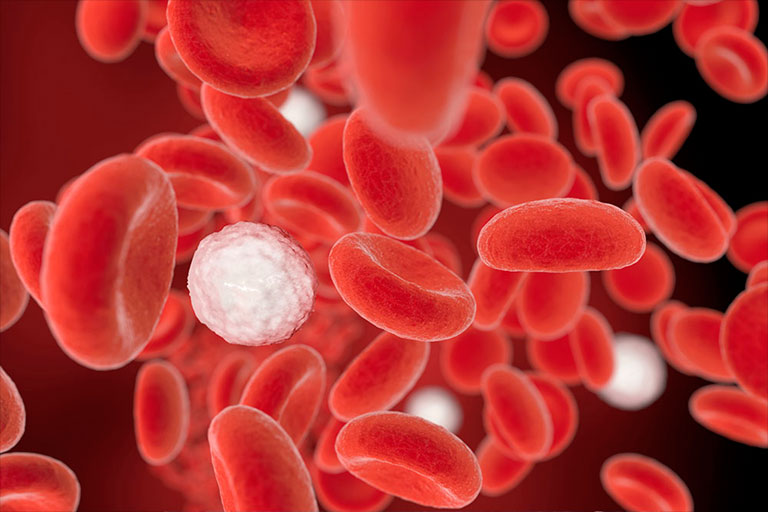
“Blood cancer” is a common term for a group of malignant diseases of the blood-forming and lymphatic system. Doctors distinguish three main groups:
- Leukaemias — malignant cells are produced in the bone marrow and crowd out normal blood formation. They can be acute (developing within weeks: acute lymphoblastic leukaemia, ALL; acute myeloid leukaemia, AML) or chronic (developing over years: chronic myeloid leukaemia, CML; chronic lymphocytic leukaemia, CLL).
- Lymphomas — tumours of lymphocytes that most often affect the lymph nodes: Hodgkin lymphoma and non-Hodgkin lymphomas.
- Multiple myeloma — a tumour of the plasma cells in the bone marrow that affects bones, kidneys and blood.
Can blood cancer be cured? Chances by type
The figures below are approximate values from large cancer registries and clinical guidelines. They are averages; an individual patient’s prognosis may be better or worse.
| Disease | What treatment can achieve |
| Acute lymphoblastic leukaemia in children | cure in about 90 % of children |
| Acute lymphoblastic leukaemia in adults | long-term remission in about 40–50 %, more often in younger patients |
| Acute myeloid leukaemia | cured in about 40–50 % of patients under 60, less often in older age; acute promyelocytic leukaemia in more than 80–90 % |
| Chronic myeloid leukaemia | with tyrosine kinase inhibitor tablets, life expectancy is close to normal |
| Chronic lymphocytic leukaemia | often progresses slowly over years; many patients live longer than 10 years, treatment starts only when indicated |
| Hodgkin lymphoma | cure in about 85–90 % of patients |
| Diffuse large B-cell lymphoma | cure in about 60–70 % of patients |
| Multiple myeloma | rarely cured completely, but modern therapy allows many patients to live 10 years and longer |
Is leukaemia curable?
Leukaemia is treatable, and many patients are cured completely. Acute lymphoblastic leukaemia is cured in about 90 % of children, while about 40–50 % of adults achieve long-term remission. Acute myeloid leukaemia is cured in about 40–50 % of patients under 60, and acute promyelocytic leukaemia in more than 80–90 %. In chronic myeloid leukaemia, tyrosine kinase inhibitor tablets give most patients a near-normal life expectancy, and chronic lymphocytic leukaemia often needs no treatment for years.
Treatment methods
Leukaemia can only be cured with a comprehensive approach: destroying the malignant cells, preventing the disease from spreading, treating symptoms and keeping the patient’s general condition as good as possible. The treatment programme is chosen according to the type of disease, the genetic markers of the tumour cells, and the patient’s age and condition.
Chemotherapy
Chemotherapy is the basis of treatment for acute leukaemias and many lymphomas. Its purpose is to stop the tumour cells from multiplying. The drugs act mainly on rapidly dividing cells, so malignant cells are affected more than healthy ones.
The effect is not selective, however, and side effects are likely: blood formation, mucous membranes and hair follicles are temporarily affected. That is why treatment is carried out in specialised units with infection prevention, blood product transfusions and round-the-clock monitoring. It is chemotherapy that made it possible to cure blood cancer, so the temporary discomfort is justified.
In acute leukaemia, treatment is given in several phases. The first is induction: intensive courses of drugs to achieve remission, usually during the first 1–2 months. This is followed by consolidation, which secures the result.
In the final maintenance phase, much lower doses of other drugs are given to suppress any tumour cells that may remain in the body. In acute lymphoblastic leukaemia this phase can last about two years.
Anti-tumour antibiotics (anthracyclines)
Chemotherapy regimens for leukaemias and lymphomas often include anti-tumour antibiotics — anthracyclines (daunorubicin, idarubicin, doxorubicin). They have nothing in common with antibiotics against bacteria except their origin: these drugs damage the DNA of rapidly dividing cells. They are given in courses under the strict supervision of a doctor, with monitoring of heart function.
Targeted therapy
Targeted drugs act on a specific defect in the tumour cells and spare healthy tissue. The best-known example is tyrosine kinase inhibitors (imatinib and newer drugs) for chronic myeloid leukaemia: they turned a fatal disease into a chronic, controllable condition. Targeted drugs are also used in chronic lymphocytic leukaemia and in some forms of AML and lymphoma.
Immunotherapy and CAR-T cells
Monoclonal antibodies (for example rituximab in B-cell lymphomas) help the immune system recognise tumour cells. For relapses of some leukaemias, lymphomas and myeloma, CAR-T therapy is used: the patient’s own lymphocytes are genetically “trained” against the tumour in the laboratory and returned to the body. In Germany, CAR-T therapy is provided by certified university centres, including in Munich.
Bone marrow transplantation
Stem cell (bone marrow) transplantation is a complex treatment, but for some patients it is the only way to a cure. Before the transplant, the diseased blood formation is destroyed with high-dose chemotherapy (sometimes combined with radiation), and then healthy stem cells are infused.
- Allogeneic transplantation — cells from a donor: a brother or sister, a matched unrelated donor from a registry, or a partially matched relative. It is used in acute leukaemias with a high risk of relapse and in some other diseases. The decision takes age and general condition into account: older and frailer patients receive gentler, reduced-intensity conditioning.
- Autologous transplantation — the patient receives his or her own stem cells collected in advance. This is standard treatment for multiple myeloma and some lymphomas.
This is a very complex treatment that should only be performed by an experienced team. The main dangers in the first weeks are infections and, after a donor transplant, graft-versus-host disease. The patient therefore stays in a special transplant unit with sterile rooms until blood formation recovers, usually for 3–5 weeks.
What affects the prognosis
- the type and subtype of the disease and the genetic and molecular changes in the tumour cells;
- age and other illnesses;
- how quickly remission is achieved and whether residual tumour cells have been eliminated (minimal residual disease);
- the experience of the clinic and access to modern drugs, clinical trials and transplantation;
- following the treatment schedule without forced interruptions.
So can leukaemia be cured? Certainly, but under several very important conditions.
First, you need experienced doctors, modern equipment and access to all necessary drugs. Without them the treatment sequence breaks down and the chances of success fall significantly.
Second, the patient must be ready to follow all prescriptions strictly and be determined to go through the difficulties of treatment with a positive attitude.
Germany is among the countries with the highest level of haemato-oncology: university hospitals work according to international protocols, offer CAR-T therapy and transplantation and take part in clinical trials. We work with leading clinics in Munich.
That is why we recommend contacting us even in the most difficult cases: we will translate your documents, obtain the opinion of a haemato-oncologist and a cost estimate, and organise your trip and support.