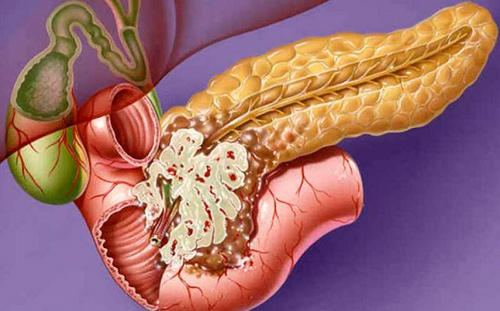
In short: yes, stomach cancer can be cured, but the chances depend greatly on the stage. In stage I most patients are cured — five-year survival is about 80–90 %, in stage II about 50–60 %, in stage III about 20–35 %. In stage IV a cure is rarely possible, but modern therapy prolongs life and preserves its quality.
At the same time there are many cases in which stomach cancer treatment did not lead to recovery. As with any cancer, stomach cancer cannot be cured at every stage, and much depends on how far the tumour cells have spread. To understand the treatment better, it helps to understand the disease.
At which stages can stomach cancer be cured?
Stage I — the tumour is in the mucosa or submucosa and has not grown deep into the stomach wall; sometimes single lymph nodes are affected. Cancer at this stage can be found by gastroscopy with biopsy, often by chance. Very early tumours are removed endoscopically (endoscopic submucosal dissection, ESD) without incisions, preserving the stomach; otherwise surgery is performed — partial or total removal of the stomach with the lymph nodes.
Stage II — the tumour grows into the muscle layer or deeper and/or more lymph nodes are affected. It is still difficult to diagnose cancer from symptoms; it is often found when patients see a doctor for general complaints. The European standard of care is perioperative chemotherapy (for example the FLOT regimen): several cycles before and after surgery, with removal of the stomach or part of it together with the lymph nodes (D2 lymphadenectomy) in between.
Stage III — the tumour has grown through all layers of the stomach wall, may extend to the oesophagus or duodenum, and many regional lymph nodes are affected. Symptoms become pronounced: pain, weight loss, anaemia, difficulty swallowing. Treatment is again perioperative chemotherapy and surgery; sometimes parts of neighbouring organs (spleen, pancreas) have to be removed. In Europe radiotherapy is used less often in stomach cancer, mainly for tumours at the junction with the oesophagus.
Stage IV — the most advanced stage, with metastases in the liver, peritoneum, distant lymph nodes or other organs. A cure is rarely possible, so drug therapy becomes the basis: chemotherapy combined with immunotherapy or targeted drugs (for HER2-positive or Claudin 18.2-positive tumours), plus supportive care. In selected cases with limited peritoneal spread, surgery with intraperitoneal chemotherapy (HIPEC) may be considered.
Chances by stage: approximate figures
| Stage | Main treatment | Five-year survival |
| I | endoscopic removal or surgery | about 80–90 % |
| II | chemotherapy + surgery + chemotherapy | about 50–60 % |
| III | chemotherapy + extended surgery + chemotherapy | about 20–35 % |
| IV | drug therapy, immunotherapy, targeted drugs | less than 10 % |
These are average figures from cancer registries. The individual prognosis depends on the tumour type, its molecular features, and the patient’s age and general condition.
Treatment methods
The most effective method is surgery: removal of the affected part of the stomach or the whole stomach together with the lymph nodes. Operations are performed open, laparoscopically or robotically. Unfortunately, once the disease has spread through the body, surgery cannot cure it.
In chemotherapy the patient receives drugs that destroy tumour cells. Their action is not selective, so healthy rapidly dividing cells also suffer and side effects occur. To reduce the burden, chemotherapy is given in cycles with breaks and accompanied by supportive treatment.
Immunotherapy (for example nivolumab) and targeted drugs (trastuzumab for HER2-positive tumours, zolbetuximab for Claudin 18.2) act more selectively and prolong life in advanced stages. To prescribe them, the tumour must be tested for molecular markers.
Radiotherapy is the targeted irradiation of affected areas. In stomach cancer it is used less often than in other tumours: for cancers at the gastro-oesophageal junction, to stop bleeding or to relieve pain.
Supportive care also plays an important role: nutrition, replacement of iron and vitamin B12 after gastrectomy, pain relief and treatment of side effects.
As you can see, there are many methods, and stomach cancer can be cured if treatment starts in time and in the right sequence. In Germany patients with stomach cancer are treated in certified cancer centres where an interdisciplinary tumour board decides on the therapy; we work with leading clinics in Germany.
They offer everything that is needed: experienced surgeons and oncologists who take on even the most difficult cases, modern equipment and access to all medicines.