



In short: yes, bowel cancer can be cured, and the earlier it is found, the better the chances. In stage I more than 90 % of patients live five years or longer, in stage II about 80 %, in stage III about 65–70 %. Even with metastases in the liver or lungs some patients are cured if all lesions can be removed. Below you will find what the prognosis depends on and how bowel cancer is treated in Germany.
What is bowel cancer?
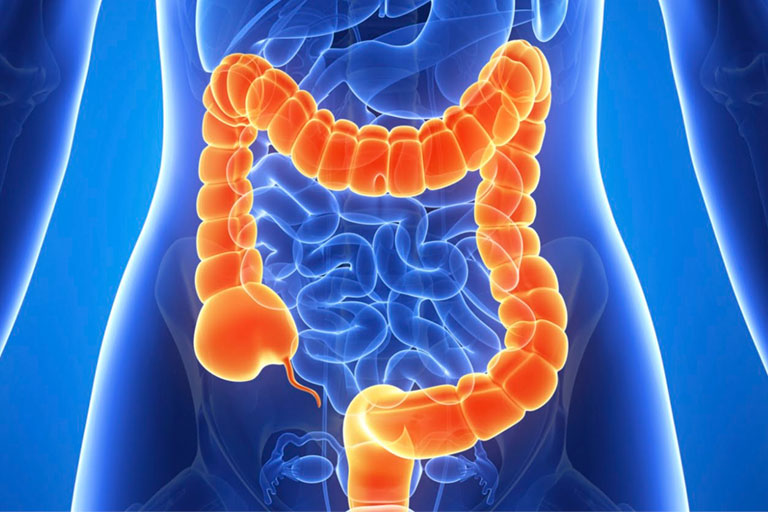
Bowel cancer usually means colorectal cancer — a malignant tumour of the colon or rectum. It is one of the most common cancers in men and women. In 9 out of 10 cases the tumour develops from a polyp over many years, so it can be prevented or detected early by colonoscopy. Cancer of the small intestine is rare and is treated differently.
What the chances of cure depend on
First, timely diagnosis is crucial. In late stages survival falls markedly, while in early stages almost all patients are cured. The prognosis of bowel cancer is no exception: the further the tumour cells have spread, the harder the treatment.
Second, much depends on the type and biology of the tumour: its grade, mutations in the RAS and BRAF genes and microsatellite instability (MSI). These findings determine the choice of drug therapy, so they must always be tested in the laboratory.
Determining them is difficult without a modern laboratory and experienced pathologists. Precise diagnostics is therefore one of the main advantages of leading European cancer centres.
Third, the available treatment methods matter a great deal. In Germany, for example, patients have access to robotic surgery, modern chemotherapy regimens, targeted drugs and immunotherapy, and treatment is decided by an interdisciplinary tumour board.
Chances of cure by stage
| Stage | What it means | Five-year survival (guide value) |
| I | tumour limited to the inner layers of the bowel wall | more than 90 % |
| II | tumour grows through the entire wall, lymph nodes not affected | about 80 % |
| III | nearby lymph nodes affected | about 65–70 % |
| IV | distant metastases (liver, lungs, peritoneum) | about 10–15 %, considerably higher if metastases can be removed |
These are average figures from cancer registries. The individual prognosis also depends on age, other illnesses and how well the tumour responds to treatment.
How bowel cancer is treated
The methods are the classic ones in oncology — surgery, chemotherapy and radiotherapy — plus targeted drugs and immunotherapy. In bowel cancer surgery is particularly effective: the affected section of bowel is removed together with the lymph nodes, and in early stages this is often sufficient.
- Surgery — laparoscopic or robotic bowel resection with removal of the lymph nodes. Very early tumours and polyps are removed endoscopically without incisions.
- Chemotherapy — after surgery in stage III (and in stage II with risk factors) it lowers the risk of recurrence; with metastases it is the basis of treatment (FOLFOX, CAPOX, FOLFIRI).
- Radiotherapy and chemoradiotherapy — in rectal cancer often given before surgery to shrink the tumour and preserve the sphincter.
- Targeted therapy — antibodies against EGFR (if there is no RAS mutation) or VEGF, drugs for BRAF mutations.
- Immunotherapy — very effective in MSI-high / dMMR tumours.
- Treatment of metastases — removal or ablation of liver and lung metastases, sometimes after a course of chemotherapy.
So can bowel cancer be cured?
Yes, it certainly can. But it must be diagnosed in time, treatment must start in time, and access to the necessary technologies is important. The best way to prevent the disease is colonoscopy: in Germany it is recommended for everyone from the age of 50, and earlier if relatives have had bowel cancer.