Organization of treatment and rehabilitation in Germany.
Complete medical support.
Complete medical support.





+49 176 17917001
All departments
Facet joint arthrosis (spondylarthrosis, facet syndrome) is a degenerative disease of the zygapophyseal joints of the spine, representing one of the most common causes of chronic back pain. Up to 30–40% of all lumbar pain cases are attributable to facet syndrome. The disease is closely linked to disc degeneration and osteochondrosis. Treatment in Germany includes precise diagnosis through blocks, interventional methods, and innovative MIBRAR® therapy that restores joint cartilage.
Facet (zygapophyseal) joints are paired joints connecting the articular processes of adjacent vertebrae. They ensure segment stability and control the range of motion, with each spinal segment having two facet joints. In arthrosis, facet joint cartilage deteriorates, articular processes hypertrophy, and the capsule becomes inflamed and thickened. This leads to pain during movements (especially extension and rotation), joint hypertrophy with spinal canal and intervertebral foramen narrowing, segment instability in severe degeneration, and facet joint cyst formation.
Facet arthrosis virtually always accompanies disc degeneration: decreased disc height increases facet joint loading, while their arthrosis in turn exacerbates segment instability — a vicious cycle.
Disc degeneration with decreased disc height overloading facet joints is the primary trigger mechanism. After age 50, facet arthrosis signs are detected on CT/MRI in 80–90% of people. Hyperlordosis (increased lumbar curvature) elevates loading on posterior spinal structures. Injuries including fractures and whiplash trauma contribute. Post-surgical changes from discectomy and laminectomy redistribute loading (FBSS). Excess weight increases axial loading. Spondylolisthesis disrupts segment biomechanics.
Characteristic features of facet pain syndrome include local pain in the lumbar, thoracic or cervical region clearly tied to the affected joint level. Pain worsening with extension is the key distinguishing feature — it intensifies with backward bending, prolonged standing, and walking downhill, unlike discogenic pain which worsens with flexion. Morning stiffness after sleep resolves within 30–60 minutes of movement. Pain may radiate to the buttock and thigh (lumbar involvement) or occiput and shoulder (cervical), but not below the knee or elbow — distinguishing it from radicular pain. Crepitus (crackling during movements) is common. Neck pain with headaches occurs when cervical facet joints are affected.
Facet syndrome cannot be diagnosed by MRI alone — radiological arthrosis signs often do not correlate with symptoms. German clinics employ a comprehensive approach. The clinical examination uses provocative tests: pain worsening with extension, lateral bending, and palpation tenderness over facet joint projection. MRI visualizes joint hypertrophy, effusion, cysts, and bone marrow edema. CT details bone changes including osteophytes, subchondral sclerosis, and joint space narrowing. Diagnostic facet blocks are the gold standard — anesthetic injection to the medial branch nerve innervating the facet joint. If pain decreases by ≥80%, the diagnosis is confirmed. Performed twice for verification. Functional radiography is used when concomitant instability is suspected.
Exercise therapy strengthens the muscular corset, stretches extensors, and corrects posture. Drug therapy with NSAIDs and muscle relaxants helps during flares. Physiotherapy includes manual therapy (mobilization), ultrasound, and thermal procedures. Aquatic gymnastics unloads joints while training muscles. Weight reduction decreases facet joint loading.
Facet blocks (injections) deliver corticosteroid and anesthetic to the medial branch with effect lasting 1–6 months, also serving diagnostic purposes. Radiofrequency denervation (RFA) thermally "switches off" medial branch nerves transmitting pain from the joints, performed under fluoroscopic guidance with effect lasting 6–18 months and a 70–80% success rate with proper patient selection (positive diagnostic blocks). RFA can be repeated. Cryoablation (nerve "freezing") offers an alternative with potentially longer effect.
Interventional methods effectively eliminate pain but do not address the cause — destroyed cartilage. For regeneration, MIBRAR® therapy is needed.
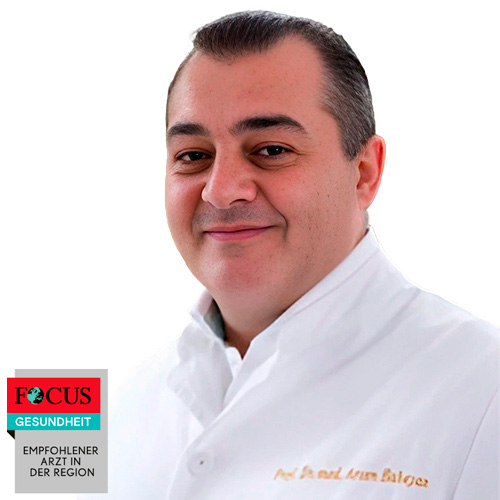
Facet joint arthrosis is one of the key indications for MIBRAR® technology (Prof. Babayan, Munich). Unlike blocks and denervation that merely mask pain, MIBRAR® restores the joint's cartilage surface.
The procedure involves obtaining autologous regenerative concentrate (ARC) from the patient's venous blood (CGF method, Medifuge MF 200 centrifuge) and subcutaneous fat (LIPOGEMS®), containing growth factors, mesenchymal stem cells, and anti-inflammatory factors. Using a spinal probe (0.8 mm) under Sono Control Arm™ guidance (0.1 mm precision), microperforations of degenerated facet joint surfaces are performed. ARC is then transplanted intra-articularly into both facet joints of the affected segment.
Results include visible joint space widening on follow-up X-ray (data from Prof. Babayan's book), simultaneous intervertebral disc regeneration of the same segment (RRBSW method), anti-inflammatory and analgesic effect without cortisone, outpatient procedure without anesthesia or side effects, and over 11,000 CGF method applications without significant adverse effects.
Surgery for isolated facet arthrosis is rarely required. Indications include concomitant spinal canal stenosis caused by joint hypertrophy requiring decompression, pronounced instability requiring stabilization (fusion), and large symptomatic facet joint cysts requiring arthroscopic removal.
| Service | Price, € | Note |
|---|---|---|
| Diagnostics (MRI + facet blocks) | 3,000–5,500 | 1–2 days |
| Radiofrequency denervation (RFA) | 4,000–7,000 | outpatient |
| MIBRAR® therapy (facet joints + disc) | on request | outpatient |
| Decompression for stenosis | 12,000–18,000 | 3–5 days inpatient |
All treatment prices in Germany.
Germany offers precise diagnosis through diagnostic blocks (gold standard), MIBRAR® therapy as the only method for facet joint cartilage regeneration, simultaneous arthrosis and disc degeneration treatment, interventional methods (RFA) for pronounced pain syndrome, a multidisciplinary approach at world-class clinics, and multilingual assistance.
Facet arthrosis is one of the most common yet most "underdiagnosed" causes of back pain. Precise diagnosis and modern treatment methods in Germany effectively eliminate pain and restore quality of life. Contact us for doctor and clinic selection.


 +49 176 17917001
Or send us a message: